
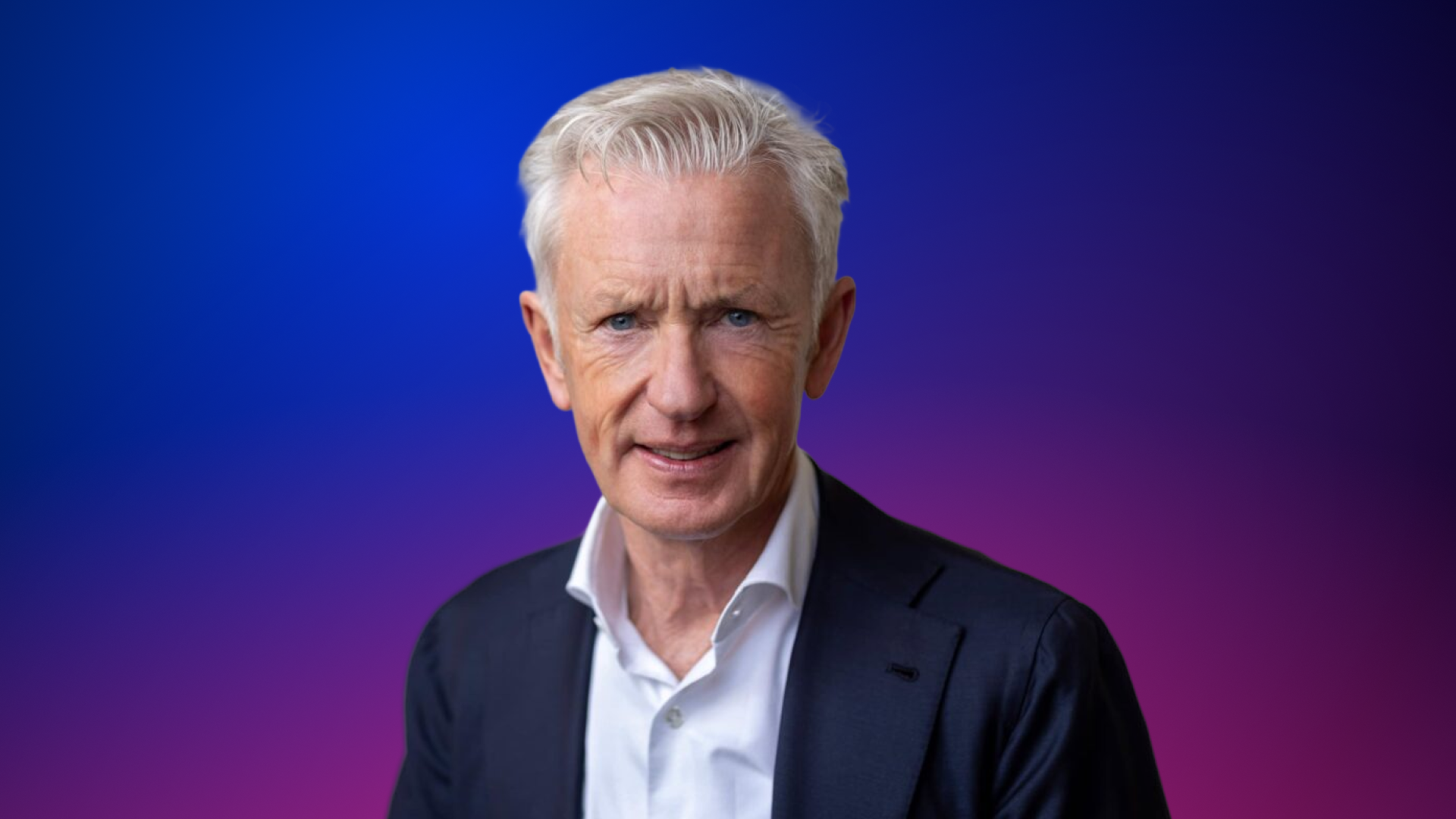


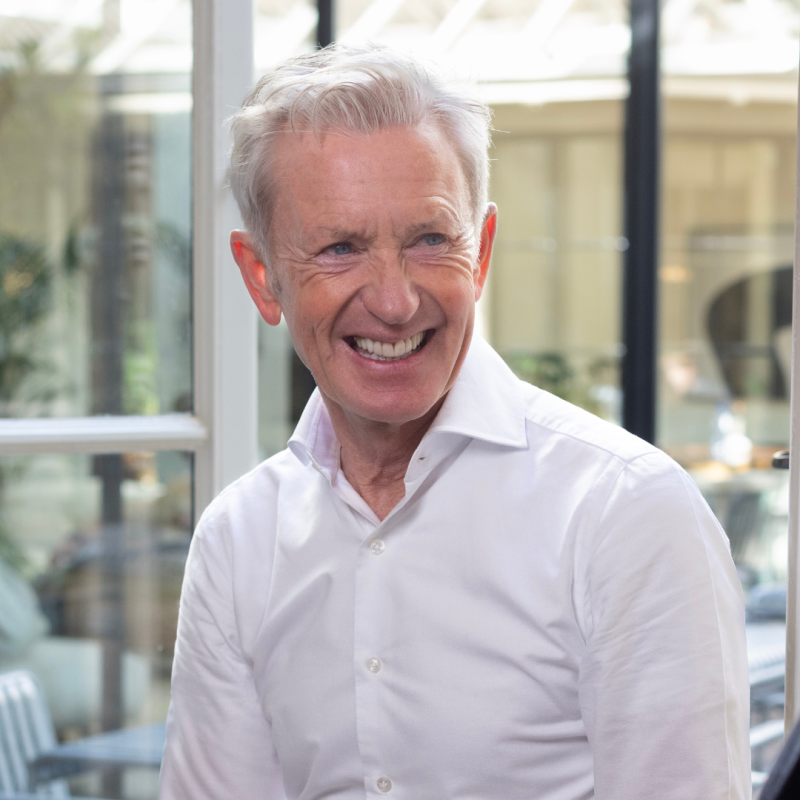
When I became CHRO at ING, I didn't see HR as a back-office function. I saw it as the architect and backbone of a much bigger transformation in how the bank worked.
During my tenure, ING rebuilt the organisation around agile ways of working. Behind the scenes, HR did something equally radical: we consolidated more than a hundred scattered HR tools and processes into a single, unified system that could actually support the way we wanted people to work. Once HR had one backbone instead of 150 disconnected pieces, we could finally behave like one global function — designing consistent performance management, building capabilities at scale, and giving leaders real insight into their people rather than a pile of local reports. Most importantly, I learned that the skills and competencies of managers at every level are the single most important driver of employee engagement and company performance.
Then we turned the mirror on ourselves in HR, reorganising into agile squads and reshaping our own operating model — not just supporting the transformation, but living it.
That journey convinced me that the next transformation of HR is not about digitising what we already do. It is about using new technology to close the gap between what we expect from managers and what we actually equip them to deliver.
I am expanding my role at Valence to chair the company's European Advisory Council. I believe Nadia is the next generation of talent and performance infrastructure.
In this role I will serve as a bridge between Valence's AI coaching platform and the CHROs and talent leaders running large European companies. In one direction, I will translate what I hear from CHROs — their priorities, their pain points, the specific problems they are trying to solve — into what Nadia should do next. In the other direction, I will help CHROs see what becomes possible when every manager has access to an AI coach with deep memory, organisational context, and real customisation.
What I see in Nadia
I took on an advisory role at Valence because I saw in Nadia a way to help managers lead better continuously — in the flow of work, at a scale no classroom or workshop could reach. A year later, I am even more convinced that AI-powered coaching is the natural next backbone for HR: a way to turn learning and performance management from annual rituals into a continuous system that builds managerial capability daily.
One question I hear often from other CHROs: why do I need a purpose-built AI coach when I already have Copilot, ChatGPT, or any of the general-purpose tools my teams are already using?
It is a fair question. General-purpose models are extraordinary. But an AI coach purpose-built for HR leaders — one that integrates into your performance processes, your leadership programmes, and your company values — is a fundamentally different tool than a chatbot that gives you a decent answer and moves on. The same pattern played out with the internet and enterprise software: the general capability powered transformation, but it did not replace the need for tools designed to solve specific problems well.
Nadia asks better questions, brings in more context, and does not rush to solutions. She comes to you when you need her, not only when you think to look. And critically, she is built as infrastructure that HR leaders can integrate into their core talent initiatives — not a standalone tool that sits beside the work, but a layer woven into how the work actually gets done.
What we are already seeing in Europe
Across some of Europe's largest companies, Nadia is proving that AI coaching is not a concept to pilot — it is a performance lever for HR teams to deploy.
At Merck in Germany, Nadia is embedded in the company's leadership development programme for high-potential leaders. High-potential attrition dropped from 3% to 1%, and the deployment is now scaling to 5,500 users. At Schneider Electric in France, Nadia was integrated into their Becoming Great Leaders programme across 11 global cohorts, customised to reflect Schneider's new IMPACT values. Participants described Nadia as speaking their language. The works council gave positive reviews across all unions.
The story that most resonates with my own conviction is Costa Coffee in the UK. Deployed to 1,600 store managers during the high-stakes holiday season, Nadia helped one manager transform an underperforming store into the top performer in weeks — holiday sales up 38% from the previous year. A second manager lifted her team's net promoter score by 20% during a period when NPS typically declines.
Why Europe, and why now
I know the specific challenges of operating in a European environment: regulatory complexity, language fragmentation, works councils, deeply embedded processes, and a well-founded instinct for due diligence that can slow adoption of new tools.
I do not see these as obstacles to adopting AI — I see them as the reasons AI coaching is particularly transformative for European companies. A tool that operates in 100 languages, respects local context, and can be customised to a company's values and frameworks helps European businesses stay aligned to their priorities and policies while moving fast enough to stay competitive.
Over the past year I have already been working with the Valence team on live deals and product feedback. In my expanded role I will focus on deepening relationships across the European CHRO community, shaping how Nadia serves this market, and making the case — practitioner to practitioner — for why this is the most powerful performance infrastructure available to companies today.
Four decades in this business taught me what managers actually need. Nadia is the closest thing I have seen to delivering it at scale.
Lorem ipsum dolor sit amet, consectetur adipiscing elit. Suspendisse varius enim in eros elementum tristique. Duis cursus, mi quis viverra ornare, eros dolor interdum nulla, ut commodo diam libero vitae erat. Aenean faucibus nibh et justo cursus id rutrum lorem imperdiet. Nunc ut sem vitae risus tristique posuere.
Lorem ipsum dolor sit amet, consectetur adipiscing elit. Suspendisse varius enim in eros elementum tristique. Duis cursus, mi quis viverra ornare, eros dolor interdum nulla, ut commodo diam libero vitae erat. Aenean faucibus nibh et justo cursus id rutrum lorem imperdiet. Nunc ut sem vitae risus tristique posuere.
Lorem ipsum dolor sit amet, consectetur adipiscing elit. Suspendisse 2 varius enim in eros elementum tristique. Duis cursus, mi quis viverra ornare, eros dolor interdum nulla, ut commodo diam libero vitae erat. Aenean faucibus nibh et justo cursus id rutrum lorem imperdiet. Nunc ut sem vitae risus tristique posuere.
Lorem ipsum dolor sit amet, consectetur adipiscing elit. Suspendisse 3 varius enim in eros elementum tristique. Duis cursus, mi quis viverra ornare, eros dolor interdum nulla, ut commodo diam libero vitae erat. Aenean faucibus nibh et justo cursus id rutrum lorem imperdiet. Nunc ut sem vitae risus tristique posuere.
.png)
